 |
|
|
|
Calligraphy Shadow Boxes
Double-sided, Layered, Translucent Artworks
2 day workshop with Denis Brown. Level: intermediate to advanced
Scroll down for description.
Illustrated on this page: 'Shadow', Denis Brown 2005. 3 layers of tracing vellum. The front and back layers are stretched over either side of a wooden frame 12mm (half an inch) deep, while the middle layer floats in between.
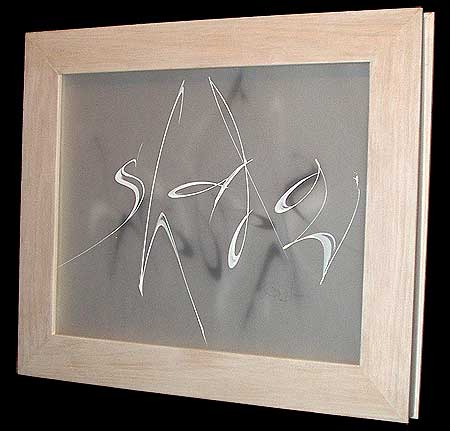
In this workshop, you will make a double sided, translucent work of layered calligraphy, which may be backlit, e.g., placed in front of a window, or with a lamp behind. Normal lighting also produces interesting views. These works may have four different views, as both sides can be viewed with light from both front and back.
Denis will discuss principles of layering, and demonstrate techniques of making shallow box constructions by stretching tracing vellum drum tight over wooden frames, and also using polyester drafting film.
Edward Johnston, the father of twentieth century calligraphy, has written that sharpness is one of the three essential qualities of formal penmanship. However in these shadow-boxes, selective blurring of the calligraphy is integral to the artistic impression.
Student Supply List:
A variety of the writing tools you like to work with: e.g.,, pens, brushes, ruling pens, droppers, automatic pens, etc.;
ink, ruler, pencils;
pad of practice paper A3 size (11" x 17") or larger;
gouache colors, palettes, mixing and loading brushes;
scalpel or scissors,
needle and thread,
PVA glue and 1" glue brush, (1" decorators bristle paintbrush is OK )
Powdered Pumice or a draft cleaning pad.
Some texts or a quotation book.
A wooden canvas stretcher approximately 10"x 14" or any similar size, (this will be used as a support for stretching layers of translucent papers).
6 or more sheets of heavy tracing paper, at least 5" larger than your canvas stretcher in each dimension
6 or more sheets of Polyester drafting film (e.g.. Duralar or frosted Mylar), at least 5" larger than your canvas stretcher in each dimension.
Also any other translucent material you'd like to work with, e.g., translucent fabrics or Japanese washi (optional). Take the initiative and think creatively about what you might like to work with.
A staple gun would be useful if you have one.
Note: This workshop is also included as part of the 5 day Layering Class.

